
Quick answer: The most reliable wildlife viewing spots near Estes Park are Moraine Park and Horseshoe Park for elk, Sheep Lakes and Rock Cut on Trail Ridge Road for bighorn sheep, and the Kawuneeche Valley on the park’s west side for moose. Elk are most dramatic during the fall rut (mid-September through mid-October), while bighorn sheep are easiest to spot in late spring at mineral licks.
Wildlife is one of the biggest reasons people fall in love with Estes Park — it’s genuinely common to see elk grazing on a golf course or downtown lawn, not just deep in the backcountry. Here’s where to look, and when.
Elk: Moraine Park and Horseshoe Park
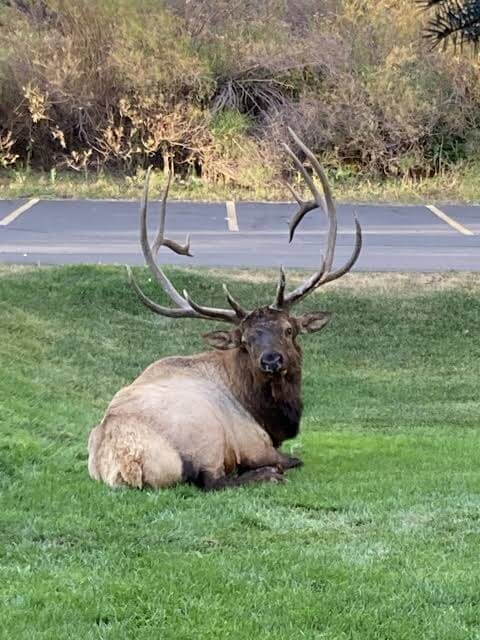
Elk are the signature animal of Estes Park, and they’re not hard to find. Moraine Park, a broad glacial valley just inside the Beaver Meadows Entrance, and Horseshoe Park, near the Fall River Entrance, are the two most consistent viewing areas, with herds grazing in the open meadows especially at dawn and dusk. Elk also regularly wander into town itself, grazing on lawns, golf courses, and even the grounds of local resorts.
The most dramatic time to see them is during the fall rut, roughly mid-September through mid-October, when bull elk gather harems and their bugling calls — an eerie, whistling roar — echo across the valleys. This is also the town’s busiest wildlife-watching season, so expect traffic jams (“elk jams”) along the main roads at peak viewing times.
Bighorn Sheep: Sheep Lakes and Rock Cut
Moose: The Kawuneeche Valley
Smaller Wildlife
Responsible Wildlife Viewing
- Keep your distance. The National Park Service recommends staying at least 75 feet (about the length of two buses) from elk and deer, and much farther from moose, which can be unpredictable and dangerous, especially during the fall rut or if a mother is with a calf.
- Don’t feed wildlife. It’s illegal in the park and harmful to the animals, changing their behavior and diet in ways that shorten their lifespans.
- Use a zoom lens, not your feet, to get closer. Wildlife jams are common — pull off safely rather than stopping in the road.
- Early morning and evening are best. Most large mammals are most active near dawn and dusk and rest in cover during the heat of midday.
Frequently Asked Questions
When is the best time to see elk in Estes Park?
Where can I reliably see bighorn sheep?
Is it safe to walk near elk in town?
Can you see moose near Estes Park?
Part of the Estes Park HQ nature series. See also: Trail Ridge Road: America’s Highest Continuous Highway and The Best Family-Friendly Hikes in Rocky Mountain National Park.